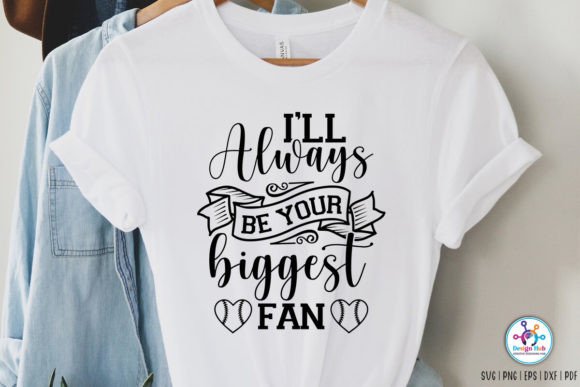
Reviewing the "I'll Always Be Your Biggest Fan" SVG for Embroidery
As a designer who spends more time staring at stitch simulations than I care to admit, I approach every new machine embroidery design with a mix of optimism and skepticism. We have all been there: you download a cute graphic, load it onto your machine, and watch in horror as the thread nests into a bird’s nest because the digitizing was an afterthought. That is why I took a close look at the Ill Always Be Your Biggest Fan SVG before committing it to any client project or personal handmade product.
This isn’t just about whether the file opens correctly. It is about how this specific phrase and layout translates from a digital embroidery file into a tangible, stitched reality. Whether you are an Etsy seller looking for your next best-seller or a hobbyist making gifts for family, understanding the practical application of this design is crucial.
First Impressions: Mood and Visual Personality
The phrase "I’ll always be your biggest fan" carries a warm, supportive energy. It is versatile enough for sports parents, proud partners, or even pet owners. Visually, the design relies heavily on typography. In the world of Crafts and Graphics, text-based designs are deceptively simple. They look easy on a screen, but they can be nightmares to stitch if the letter spacing is too tight or the fonts are too thin.
My first impression of this digital embroidery file was positive regarding its clarity. The lines appear clean, which suggests that the underlying vector paths are well-constructed. This is essential because clean vectors usually translate to cleaner stitch paths. The mood is affectionate but not overly sentimental, making it a strong candidate for everyday wear rather than just special occasions. It feels like a design that belongs on a comfortable sweatshirt or a sturdy tote bag, items that see daily use and require durable stitching.
Real-World Application: The Sweatshirt Test
To truly evaluate the Ill Always Be Your Biggest Fan SVG, I imagined applying it to a classic mid-weight cotton blend sweatshirt. This is a staple item for any craft business. When visualizing the design on this fabric, the scale becomes the most critical factor. If the text is too small, the intricate curves of the letters might get lost in the fleece texture. If it is too large, it could stiffen the chest area uncomfortably.
For a standard adult sweatshirt, I would recommend sizing the design to span approximately 8 to 10 inches wide, depending on the specific font weight. This size allows the satin stitch or fill stitch elements to breathe. On a textured fabric like fleece, a design with moderate stitch density performs best. If this design uses heavy fill stitches, it might pull the fabric, creating puckering around the letters. However, if it utilizes a combination of running stitches for outlines and lighter fills, it will lay flat and feel soft against the skin.
This versatility makes it an excellent choice for custom apparel. Imagine a set of matching shirts for a family attending a child’s soccer game. The design’s message reinforces the supportive role of the family, adding emotional value to the personalized gift. Customers do not just buy the embroidery; they buy the feeling it represents.
Navigating Fabric Challenges and Hoop Sizes
Not every project is a straightforward sweatshirt. Let us consider a curved surface, like a baseball cap. Caps are tricky. The Ill Always Be Your Biggest Fan SVG would need to be carefully centered on the front panel. Because caps have limited space and a curved structure, you must ensure the design does not extend too close to the seams. A hoop size limitation here is real. You might need to resize the design significantly, which brings us to a critical warning: check the legibility at smaller sizes.
If you shrink this design for a hat or a baby onesie, the tiny details in the lettering—such as the crossbars in an 'A' or the tails of a 'y'—might merge. For baby embroidery, softness is paramount. I would advise using a light cut-away stabilizer to support the stitches without adding bulk. Always test on scrap fabric first. What looks crisp on your monitor might look jagged on stretchy knit fabric if the stabilizer is insufficient.
Dark fabrics present another challenge. If you are stitching white thread on a navy blue hoodie, you need high contrast. Ensure that the thread colors you choose pop against the background. This design likely looks best with solid, bold thread colors rather than variegated threads, which can obscure the readability of the text. Clarity is king in typography-based embroidery.
Commercial Viability for Small Shops
For small shop product creators and Etsy sellers, this design offers strong commercial potential. It fits neatly into several niches: sports mom gear, teacher appreciation gifts, and Valentine’s Day items. The phrase is evergreen, meaning it does not rely on a trending meme that will fade in a month. This longevity is valuable for building a consistent catalog of design assets.
When creating listings, use high-quality printable mockup images to show the design on various products. Show it on a tote bag design, a mug (using the printable files), and a pillow. The product description notes that you receive SVG, PNG, EPS, PDF, and DXF files. This multi-format availability is a huge plus. It means you are not limited to embroidery. You can use the PNG for sublimation on phone cases or the SVG for vinyl cutting on signs. This versatility increases the perceived value of the purchase.
However, professionalism is key. Before selling finished items, confirm the licensing terms. While the product description mentions use for Christmas gifts, shirts, and more, always double-check if commercial rights are included for the specific vendor you purchased from. Trust is built on transparency. If you are unsure, reach out to the creator. A clear license protects your craft business from legal issues down the line.
Technical Notes for the Embroiderer
Here are my practical notes for anyone planning to stitch the Ill Always Be Your Biggest Fan SVG:
- Stabilizer Selection: Use a medium-weight cut-away stabilizer for knits and stretchy fabrics to prevent distortion. For woven fabrics like tote bags, a tear-away might suffice, but test first.
- Thread Choice: Polyester thread is generally more durable for items that will be washed frequently, such as shirts and towels. Rayon offers a nicer sheen for decorative pieces like wall hangings or pillows.
- Needle Size: Match your needle to your thread and fabric. A universal 75/11 needle is a good starting point for most cotton blends.
- Test Stitch: Never skip the test stitch on scrap fabric. Check for thread breaks, nesting, and fabric puckering. Adjust tension if necessary.
- File Format: Ensure you convert the SVG to the specific format your embroidery machine reads (such as PES, DST, or JEF) using reliable software. Do not assume the SVG file plugs directly into the machine without conversion.
Final Verdict
The Ill Always Be Your Biggest Fan SVG is a solid addition to any designer’s library. It balances emotional appeal with practical usability. It works well for holiday embroidery, everyday custom apparel, and thoughtful personalized gifts. By paying attention to fabric choice, stabilizer support, and appropriate sizing, you can turn this digital file into a high-quality finished product that customers will love. It is a reminder that in embroidery, the best designs are those that communicate clearly and stitch reliably.