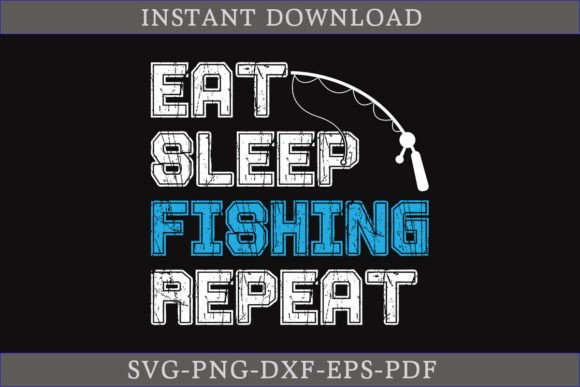
Eat Sleep Fishing Repeat Shirt SVG: A Designer’s Review
As an embroidery designer who has spent countless hours digitizing and testing files for real-world application, I approach every new machine embroidery design with a critical eye. It is not enough for a graphic to look good on a screen; it must translate seamlessly into thread, withstand the tension of the hoop, and appeal to the end customer. Recently, I evaluated the Eat Sleep Fishing Repeat Shirt SVG to determine its viability for commercial and personal projects. This review breaks down how this specific embroidery file performs when moved from digital asset to tangible handmade product.
First Impressions and Visual Personality
The immediate appeal of the Eat Sleep Fishing Repeat Shirt SVG lies in its thematic clarity. The phrase captures a lifestyle rather than just a hobby, which resonates deeply with a specific demographic. Visually, the layout suggests a balanced composition, likely combining typographic elements with illustrative icons associated with angling. For a designer, this balance is crucial. If the text overwhelms the graphic, the design feels cluttered; if the graphic is too complex, it may lose definition when stitched.
The mood created here is relaxed and recreational. It does not scream for attention with aggressive colors or chaotic lines. Instead, it offers a steady, rhythmic visual that fits well within the Crafts and Graphics categories aimed at outdoor enthusiasts. When I first opened the files, I looked for clean vector paths in the SVG and EPS formats. Clean lines are essential because they dictate how smoothly the embroidery software will convert the image into stitch types like satin stitch, fill stitch, or running stitch. A messy vector often results in unnecessary jump stitches or poor density management.
Real-World Application: From Digital File to Finished Product
To truly test the value of this design, I imagined it in several common production scenarios. The most obvious application is custom apparel. Picture this design centered on the chest of a heather gray sweatshirt. The contrast between dark thread and light fabric would make the "Fishing" motif pop, creating a high-quality sweatshirt embroidery piece that feels boutique rather than mass-produced.
Beyond apparel, I considered its use on accessories. A canvas tote bag design featuring this motif would appeal to anglers who need gear storage. The durability of the stitch work becomes paramount here. Since tote bags undergo significant stress, the stitch density must be sufficient to prevent the fabric from showing through, yet not so dense that it causes puckering. Another excellent candidate is an embroidered patch. Patches allow for tighter control over stabilizer and backing, ensuring that the details of the Eat Sleep Fishing Repeat Shirt SVG remain crisp even after repeated washing.
For Etsy sellers and small shop owners, versatility is key. This design could easily transition into home decor, such as a kitchen towel for the fisherman who also loves to cook the catch. In this context, the design acts as a personalized gift that feels thoughtful and specific. The ability to offer this as a holiday embroidery option for Father’s Day or Christmas adds significant seasonal revenue potential for craft businesses.
Technical Considerations and Stitching Challenges
While the concept is strong, practical execution requires attention to detail. One must consider the substrate. Embroidering on textured fabrics, such as waffle-knit towels or heavy denim, requires adjustments. If the Eat Sleep Fishing Repeat Shirt SVG contains fine lettering, these textures can obscure small details. I recommend using a cut-away stabilizer for stretchy fabrics like t-shirts to maintain shape integrity during and after stitching.
Curved surfaces present another challenge. Applying this design to a cap requires careful hooping and possibly a smaller version of the file to fit the front panel without distortion. If the original file is large, scaling it down might compromise the legibility of the text. Always check the minimum readable size before committing to a production run. Additionally, dark fabrics require careful selection of thread colors. A white or light-colored thread on navy blue works well, but if the design relies on subtle shading, ensure your digitizing software handles color transitions smoothly to avoid a muddy appearance.
It is also vital to inspect the file formats provided. The product description notes that you receive a zip archive containing SVG, DXF, EPS, PNG, and PDF formats. For embroidery machines, you will typically need to import the SVG or DXF into your digitizing software to generate the actual stitch file, unless pre-digitized PES or DST files are included (which should be verified in the full file description). If you are using the SVG for cutting machines like Cricut or Silhouette for heat transfer vinyl, the clean vectors are ideal. However, for needle-and-thread work, never assume the SVG is ready-to-stitch without proper digitizing parameters.
Enhancing Brand Value and Customer Trust
Using a well-structured design like the Eat Sleep Fishing Repeat Shirt SVG contributes directly to brand consistency. When customers receive a finished product where the stitching is even and the design is centered, their trust in your craft business grows. High-quality design assets allow you to create professional printable mockup images for your online store, increasing buyer engagement before they even make a purchase.
For commercial embroidery projects, consistency is everything. If you are producing ten shirts for a fishing club, the design must reproduce identically on each garment. Testing the design on scrap fabric first is non-negotiable. This step allows you to verify thread tension, check for any thread breaks in dense areas, and confirm that the hoop size is appropriate for your machine. It also helps you determine if an underlay stitch is needed to stabilize lightweight fabrics.
Practical Notes for Designers and Makers
Before integrating this design into your inventory, consider these actionable steps:
- Test on Scrap Fabric: Always run a test stitch-out on the same material you plan to use for the final product. This reveals issues with puckering or registration.
- Check Thread Contrast: View your design in black and white to ensure the shapes are distinct without relying on color differences. This ensures visibility on various fabric backgrounds.
- Verify Licensing: Confirm whether the license allows for unlimited commercial sales of finished items. Most SVG bundles permit this, but always read the specific terms provided by the creator.
- Inspect Small Details: Zoom in on the vector file. Are there overlapping paths or stray nodes? Cleaning up the SVG before digitizing can save hours of troubleshooting.
- Consider the Audience: This design appeals to hobbyists and serious anglers alike. Tailor your marketing language to highlight the lifestyle aspect, making it an ideal baby embroidery gift for future fishermen or a rugged accessory for adults.
In conclusion, the Eat Sleep Fishing Repeat Shirt SVG offers a solid foundation for a variety of embroidery projects. Its strength lies in its relatable theme and versatile layout. By paying attention to technical details like stabilizer choice, thread density, and fabric compatibility, designers can transform this digital file into a high-value small shop product. Whether you are creating custom apparel for a local boutique or personalized gifts for friends, this design holds up well under scrutiny, provided it is executed with professional care.